Blog

Spring Crops

What are the first crops that we should consider planting in our gardens in the spring? When the soil can be worked, we have a wide range of cold-hardy choices to consider. These crops all have a few things in common. They:

  • germinate in cold soil
  • grow well under cool conditions, and
  • tolerate a light frost.

Many of these crops can and should be planted in cool conditions, else you risk poor germination, poor development, and inferior flavor and/or texture. You’ll want to get them in the ground as early as you can to allow them time to develop before the heat of summer sets in. With good planning and a little cooperation from the weather, you’ll be able to harvest these crops in time to follow up with a warm weather crops such as beans, tomatoes, and cucumbers. Pay attention to the days to maturity information listed on many seed packets, and look for quick-growing varieties to make the most of your growing season. Also, be prepared to cover your crops with frost protection if temperatures take an abrupt and extreme downturn. Or stagger your plantings with the anticipation of a few losses.

  • alyssum
  • arugula
  • beets*
  • broccoli
  • Brussels sprouts
  • cabbage, including Chinese cabbage
  • carrots*
  • cauliflower
  • celery
  • cilantro
  • collard greens
  • fava beans
  • hardy perennial herbs, such as chives, thyme, mint, oregano, and sage
  • kale
  • kohlrabi
  • leeks
  • lettuce
  • onions*
  • pak choi
  • pansies
  • parsley
  • parsnip
  • peas
  • radish
  • rutabaga
  • Swiss chard
  • tatsoi
  • turnips
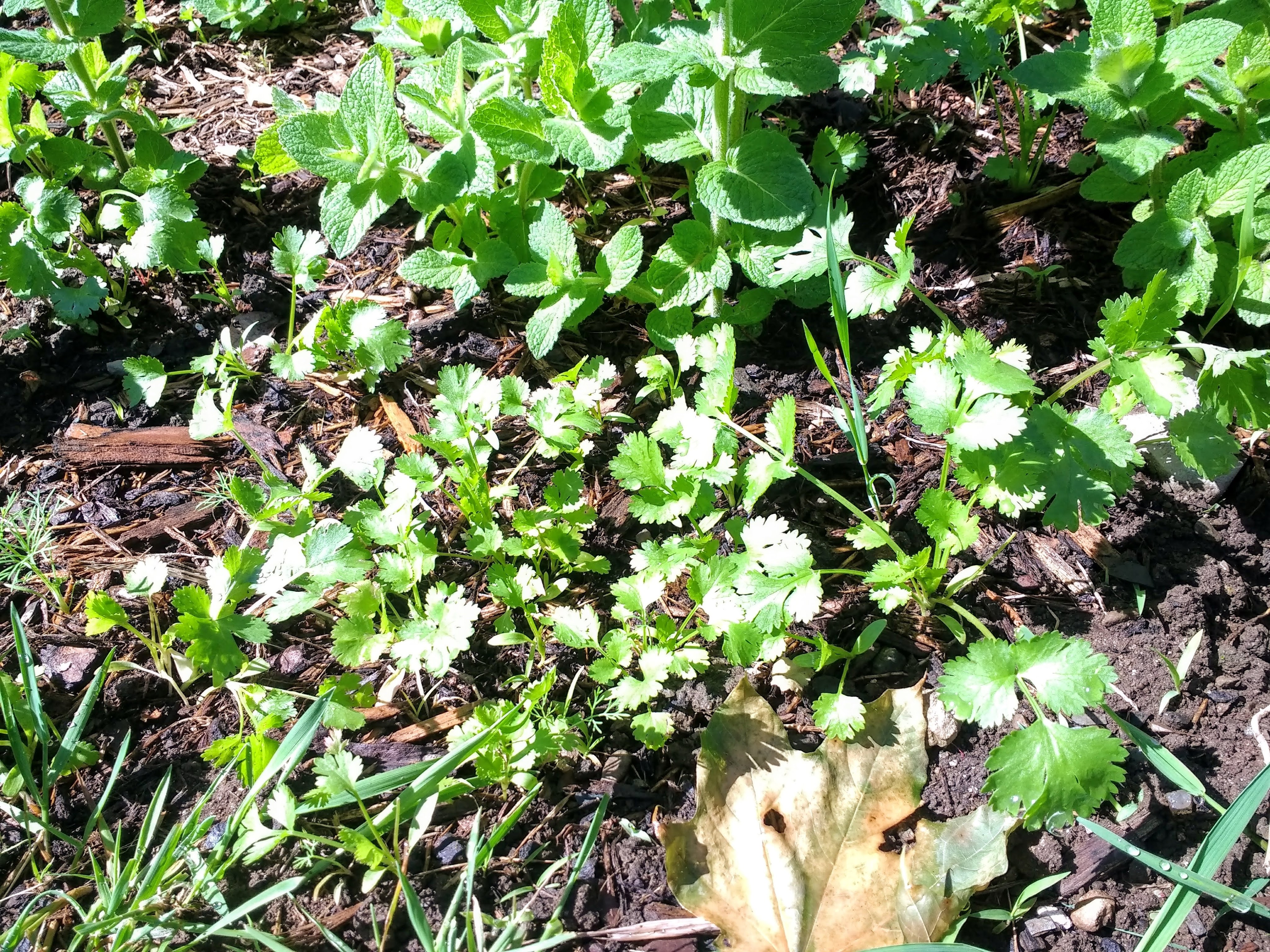
img_20190608_094507449_hdr
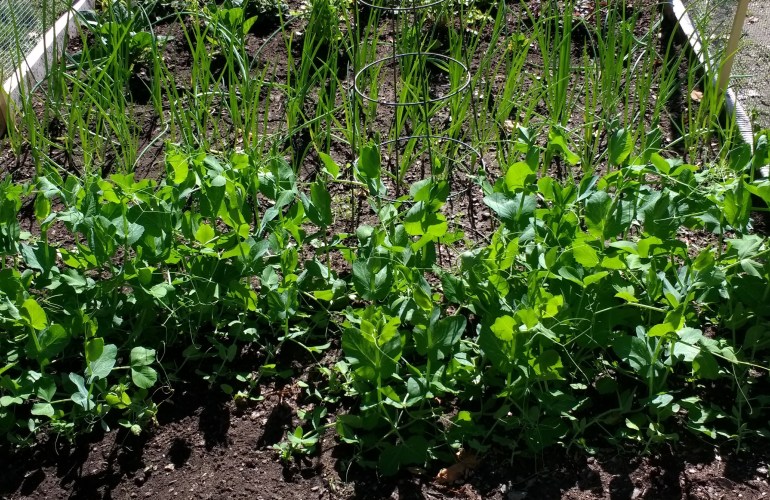
Cilantro (foreground) often reseeds itself and grows in the spring when conditions are just right. If you like it, leave it be. Self-sown plants are often the least fussy.
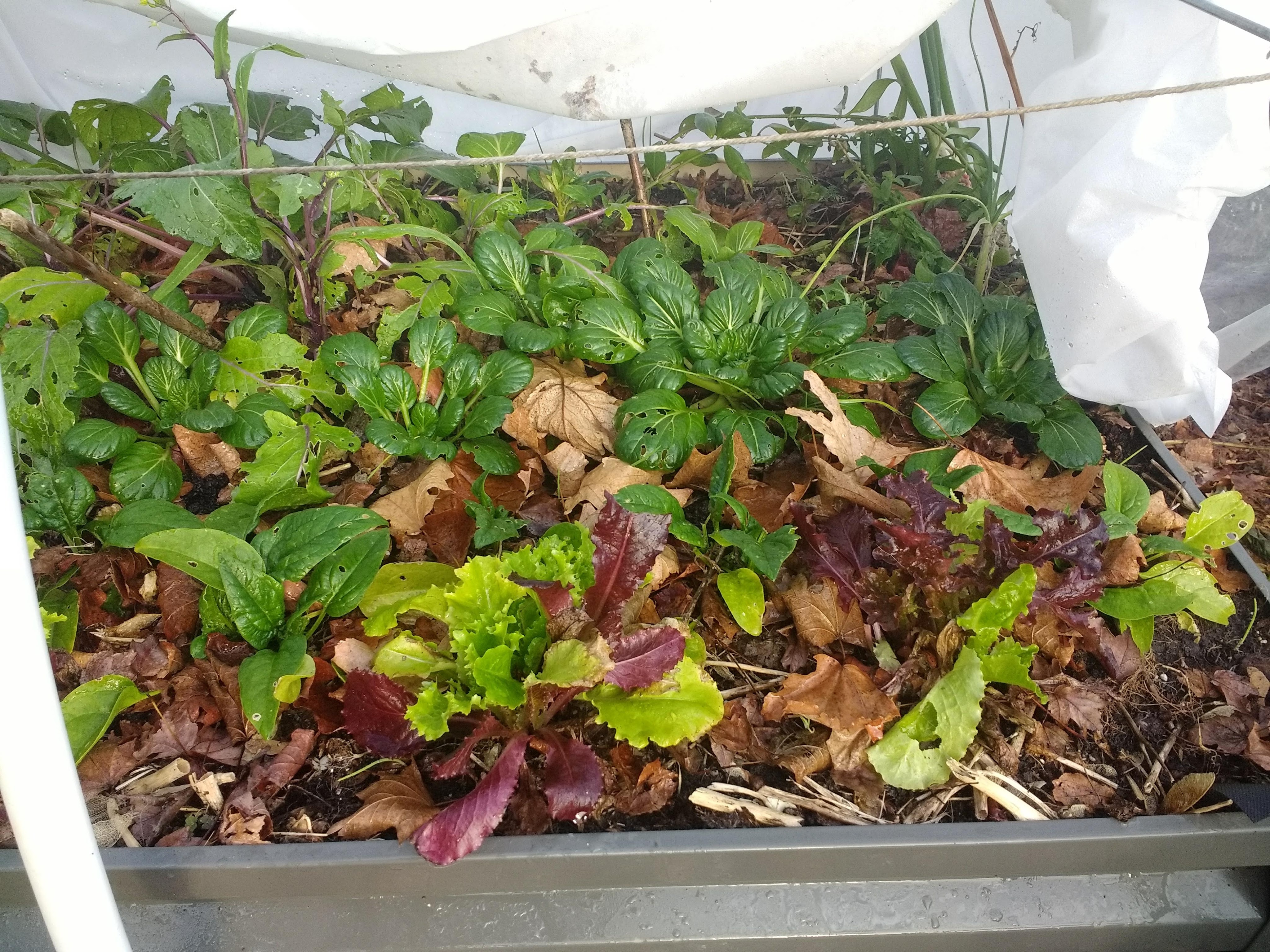
img_20191210_082746432
Lettuce, spinach, tatsoi, and Hon Tsai Tai, a broccoli-like green, thrive under cool conditions. Damage thanks to slugs.

In my home garden, I’ve been able to overwinter a few of these crops–lettuce, arugula, bunching onions, spinach, tatsoi, carrots, parsley, cilantro, kale, and Hon Tsai Tai, a broccoli-like green–under protection. They didn’t grow much, but under protection, the limitation seemed to be more about diminishing winter light than cold.

On the other side of spring, a few of these crops such as the ones marked* generally can carry over well into hot conditions. With regard to one of these crops–carrots–I think a better option is to select quick-growing cultivars that mature in late spring/early summer, and then squeeze in another crop of in the fall, perhaps for overwintering. They’ll taste sweeter if they are harvested in cool conditions.

Some of the others on the cool list, such as lettuce, have cultivars purported to withstand the heat. I have yet to find a lettuce I can grow well in the summer heat, no matter what the claim on the seed packet. (Anyone? I’d love to have some lettuce with my summer cucumbers and tomatoes.) BUT, you can cheat the season a little by growing leafy vegetables in partially shaded areas.

One other note: Last summer my parsley bolted (went to seed) in early summer, and I have since read that young parsley seedlings exposed to substantial cold are more likely to have this tendency. In this case, you may want to grow a backup batch for late summer/fall. If the winter is not too harsh, they’ll even overwinter.

Ready to do some cool growing? Happy spring, everyone!


For more reading:

Cold-weather growing tips from Seed Savers Exchange.

Tips on when to start cold-weather crops from GrowVeg.

Also from GrowVeg, the “mess of protecting plants from stress.”  Lol, this is how my front yard looks right now, with hoop houses and frost blankets. Take a quick look at this article if only to see their simple, but smart way to keep plastic milk jugs in place as cloches.

The Year-Round Vegetable Gardener by Niki Jabbour (2011) is a great beginners’ resource for learning all about season extension and growing in cool and cold seasons. It’s available free from Hoopla; I liked it so much I purchased my own copy.

Eliot Coleman is well-known for four-season gardening. Here are two titles, Four-Season Harvest and The Winter Harvest Handbook. Available through Old Colony Library Network.

Use this planting schedule as a very rough guide.

Here’s a more tailored seed-starting and setting-out calculator from Johnny’s. (Note that you have to enter our region’s frost-free date, which can be tricky to figure out. The Farmer’s Almanac reports a frost-free date of April 22, using weather data from South Weymouth and allowing for a 30% risk of frost.) I feel all right using this data for cold-weather plants, but for warm-weather plants, I like less risk of frost.
2019 Letter to PPCG Members

Hello Gardeners,

I always say this, but once again, I can’t believe we are already planning another season at PPCG. I hope we are getting out our 2020 contracts early enough so that we can catch any of you who head off to warmer places for the winter.

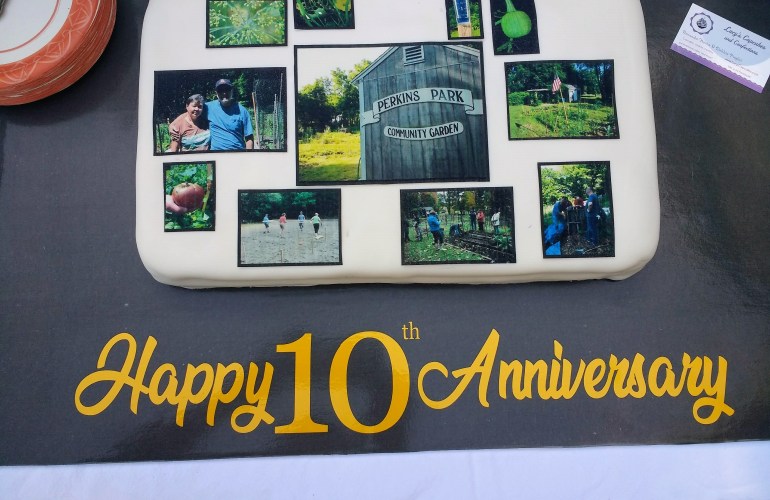
The 2019 season marked our 10th growing season at Perkins Park. I’m trying to

DSC_2475E

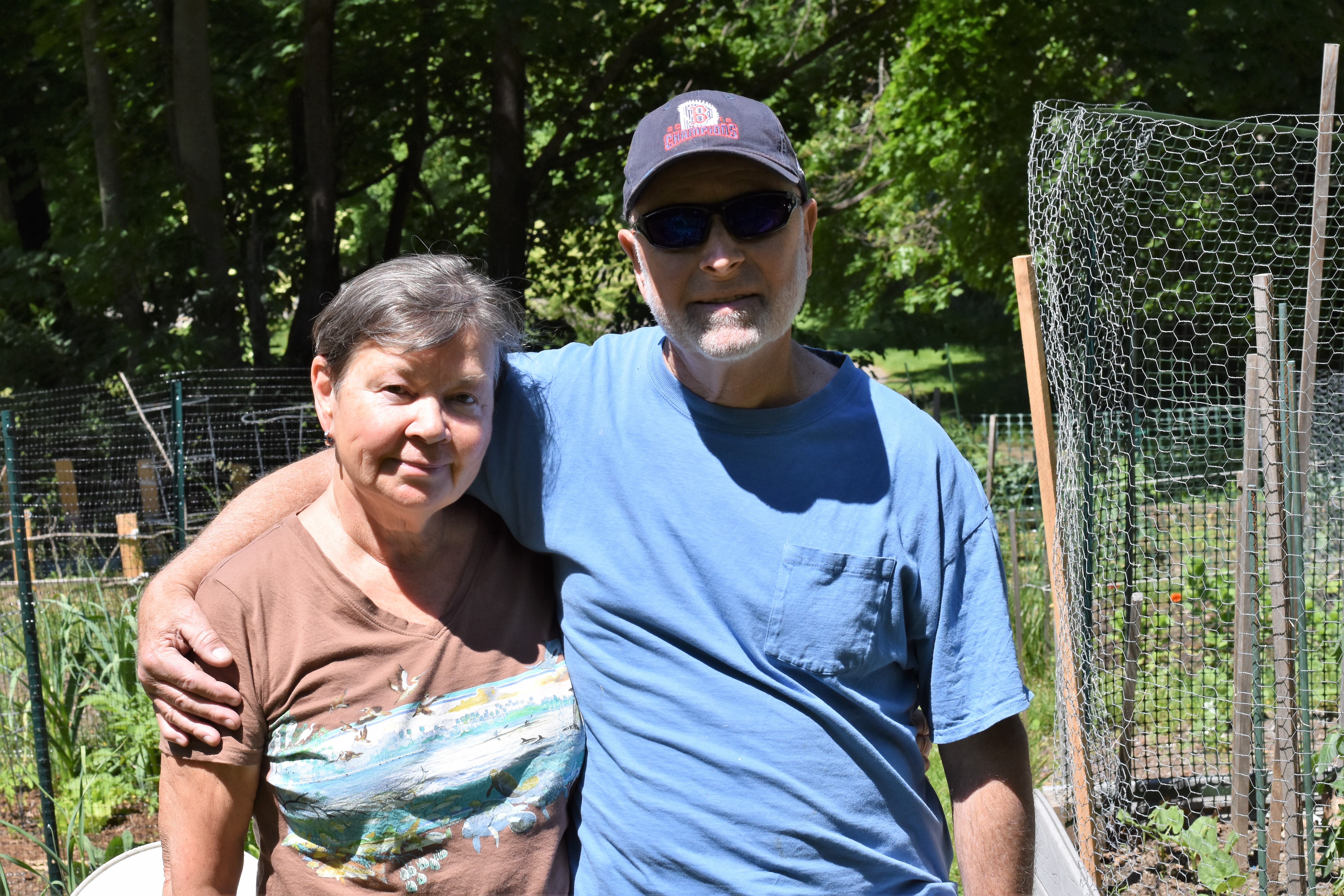
remember who has gardened here since our first year, and I think we have a few, including Joe M., Jun W., Ed K., John and Christine S., me (Suzanne B.)…anyone else? In any case, thank you to everyone for all of the work you put into making our 10th year a successful one.


  • In early June, we partnered with Gardin in Braintree, who provided us with over fifty basil, tomato, and cucumber seedlings to pass out at Sustainable Braintree’s table at the farmer’s market.DSC_2526 (2)E
  • A lot of garden fences went up this year, and as a result, most of us were successful in keeping out the deer. I do want to mention that a Swiss chard-loving deer was able to get into John and Christine’s garden by wiggling through a weak corner. Once they figure it out, we have to keep one step ahead of them.
  • The flower bulbs we planted for early spring food for our bees came up, but sadly the bees didn’t. Our beekeeper lost his colony last spring and did not return with a new hive. We’ve been contacted by another beekeeper, Andy Rice, who would like to put a hive on our property next year.
  • I’m hearing a lot about the threat of mass insect extinction–not just bees–worldwide. Aside from keeping poisons out of the garden, another way to support insects and other wildlife is to care for the native plants in our space such as burdock, goldenrod, chicory, aster, blackberry, and sumac.

    This slideshow requires JavaScript.

    In the spring/early summer, we pulled a bunch of garlic mustard, an invasive plant that outcompetes natives. And we’ve given room for native plants to grow around the edges. There’s always a balance to be achieved between the wild and cultivated portions of our space, so especially for those of you on the borders, if you are finding yourself cramped by wilderness (!), let us know. Gary always likes to keep at least enough space to pass comfortably with the mower. Similarly, the mint that’s taken over a large portion of the garden is enjoyed by a wide variety of pollinators, so we’ve resisted taming it. Next season we can reclaim some of that space if we have other herbs we’d like to grow.

  • We kept up John and Christine’s garden and grew lots of potatoes, Swiss chard, green beans, lettuce, and radishes. The tomatoes, zucchini, and peppers struggled all summer, so we had the soil tested, which found super high levels of phosphorus. I’m mentioning this because I’ve had this problem in my garden, too, and it’s a good reminder that even compost and organic products can be overdone. High phosphorus causes problems because it can bind with important nutrients such as nitrogen and calcium, which are then not available to your plants. There’s no way to get rid of the phosphorus, other than to wait it out. I put on a light application of blood meal and planted peas and oats as a cover crop to fix more nitrogen, which seemed to help.
  • We started a new policy asking gardeners to cover their plots for the winter season. IMG_20190427_110744510This practice is an easy one that will make a big improvement to long-term soil health. It’s up to you to choose what materials you’d like to use. Leaves and tree debris and healthy crop residue are free for the taking, but shredded mulch, straw, etc., and fall cover crops are other possibilities. Also consider leaving behind garden plant roots in the soil (or even leave the whole plant intact if it’s healthy) and limit your digging. I know the end results looks a bit messy if you are used to and evenly-raked clean garden bed, but these methods will build healthy soil.
  • Gary and I presented at Sustainable Braintree’s annual meeting with an overview of ten years of organic gardening practices at PPCG. I will work on getting that presentation up here on our blog; it’s interesting to think about how we’ve moved from a primary focus on excluding toxic chemicals to include other principles of organic gardening, such as the soil health practices I just mentioned above.
  • Let’s talk about food waste, please. We’d hoped to be able to donate unwanted veggies to local food pantries that accept fresh foods, but we ran into a couple of difficulties. 1) We had only dribs and drabs. 2) Gary and I don’t like entering into even gardens that appear to have been abandoned. So…that means we all have to keep an eye on our gardens and make sure we’re not wasting produce. Check on your gardens at least once per week, pick your produce, and/or offer it to other people if you can’t use it. And as always, if you find yourself unable to care for your plot, please ask for help or relinquish it for the season so that someone else can use it. You are always welcome to put your name back on the list to try again another year.
  • One more quick reminder: Our height limitation for garden structures and plantings is 6 feet to avoid casting shade into adjacent gardens.
  • After 10 years, the shed finally has a white coat of paint over the primer. Many thanks to Peter W. for doing a beautiful job. The shed looks ready for the next ten years.IMG_20190427_111133846 (1)E
  • More thank yous to:
    • Amanda and Leo H. for donating a beautiful 10th anniversary cake from Amanda’s business, Lucy’s Cupcakes and Confections.
    • Marie H. for tending to the pergola and herb garden every week.
    • John S. for taming the wisteria beast on the pergola.
    • The mystery gardener(s) who kept the garden mowed while Gary was away and repaired the hose at the shed.
    • I’m sorry if I missed anyone. Please let me know!

2020 Contracts are now available for returning members. Have a happy New Year and an easy winter, everyone!

Suzanne & Gary, Co-Managers

Underfoot, Lofty: Good Soil for a Healthy Planet (P. 2/3)

To recap P. 1, building healthy soil in the garden means taking care of the billions of living organisms underfoot. It’s not as big of a job as it sounds. In our small community garden plots, we can adjust our practices easily and work less by retiring old methods like double-digging and other strenuous soil churning. Easing up on soil disruption protects its complex ecosystem and makes for happier plants.

Soil for the Planet

If that’s not enough to convince you to put down the shovel, consider the climate. One of the key drivers of climate change is the burning of fossil fuels, but did you know that some modern agricultural practices–including tilling–also have released significant amounts of carbon into the atmosphere?

Where is that carbon coming from? It’s right there in the soil, everywhere.  It’s in the roots of plants, in decaying leaf mulch, in earthworms, in sugars released by plants, and in long threads of fungal networks. Around 50%  to 58% of the organic matter in soil is carbon.

Unfortunately, our cultivated land has lost around half of its organic matter, from 5% levels of soil organic matter down to less than 3%. We want that carbon back! Soil life is built from carbon and depends on it to survive, which makes soil a great reservoir for carbon. In the soil it can do good things for us, whereas too much of it in the atmosphere contributes to climate change.

Regenerative agriculture or carbon farming aims to do just that–to put carbon back into the soil using a variety of practices, including no-till farming. It’s not a straightforward process. Some of the systems at work in the garden naturally put carbon back into the atmosphere no matter how carefully we tend our soil. For example, all of those wonderful soil microbes expire carbon dioxide when they break down organic material. Microbes in an acre of corn can expire as much carbon dioxide as twenty five active men.

In very rough terms, it’s a two-step-forward/one-step-back kind of a process, which means that the goal of carbon farming is to put more carbon into the soil than is released. Here’s where things get a little tricky and controversial, figuring out the best agricultural practices to sink the most carbon and keep it in the soil. Soil scientists have paid attention to a substance called glomalin, produced by fungi, which acts like a glue holding soil particles together in aggregates. (Remember, that cottage-cheesy, pebbled texture?) Some scientists think glomalin may tie up 27% of soil carbon for as long as 40 years.

Soil scientists have also paid attention to humus, the carbon-rich, coffee-colored, fertile part of soil. It’s hard to define humus exactly because it’s not clear how humus is formed; some think it’s a product of decomposition of organic matter, while others think that it’s a built-up product of soil organisms utilizing the sugars exuded by plants. In any case, the important quality of humus is that like glomalin, it’s considered by many to be recalcitrant, meaning that it’s likely to stay in the soil for a long time. These are the kinds of long-term storage we need to draw down the imbalance of carbon in the atmosphere.

Farmers worldwide are already using regenerative agricultural practices, in no small part because they improve productivity and in the long-run, make economical sense. Green America is cheering on home gardeners to do the same.  Their idea is this: our individual plots may be small, but collectively, we might be able to make a difference, similar to the way victory gardeners of WWI and WWII grew up to 40% of the fresh produce consumed in the U.S..

This slideshow requires JavaScript.

The posters above were published by the U.S. Food Administration, created by Woodrow Wilson by executive order in 1917. Leading the newly-formed administration, Herbert Hoover had the power to act as “food dictator,” but strove to design “an effort that would appeal to the American sense of volunteerism and avoid coercion.” (I know I’m getting a little off track here, but I think this is interesting stuff and definitely relevant to the question of how to get large groups of people to act quickly in helpful ways for a common cause–like climate change.)

Bottom Line?

Ditching some of our old gardening methods may not only build the soil for our plants, but also may make a positive impact on the planet. I’m convinced at the very least that  strategies that support soil life yield more productive, sustainable, and healthier gardens. As we’ve said before at PPCG, our only organic gardening rule that we enforce is  “no synthetic agricultural chemicals.” But I hope you’ll consider making some changes in how you tend your plot, if for no other reason than you’ll get better results. For more info, take a look at the links below.

Up next, since I know we’re all itching to get in the garden: regenerative techniques we can use in our own gardens.


For More Info…

For starters, a nice graphic comparing “regenerated soil” vs. “dead dirt,” from Green America.

Here’s another good place to start. This short video explains regenerative agriculture in easy-to-understand language, from Kiss the Ground. And here’s a scripted version with some added details.

Another accessible piece–on fungi and their role in the carbon cycle–from NPR.

From Green America, understanding the complexities of soil.

From Northeast Farming Association (NOFA), really helpful white paper on soil carbon restoration. Read this if you want to go into more depth on this topic. It’s written for the general public and covers a lot of ground.  NOFAMass has become my favorite go-to source on soil-building.

From the New York Times Magazine, an article on changing agricultural practices to draw down carbon from the atmosphere. (Local readers: if you don’t have a NYT subscription and have used up your free monthly articles, our local library offers free three-day passes. Here’s a link to digital media.)

The Soil Will Save Us by Kristin Ohlson (2014). I haven’t been able to get a copy of this book yet, but it looks like it’s available through Boston Public Library.

From nature.com, a relatively short, but more technical presentation of soil carbon sequestration. This was the first piece I read that helped me understand the balance of carbon inputs and outputs. Also covers some aspects of carbon sequestration such as soil mineralogy and land topography.

SOS: Save Our Soils. Very interesting 2015 interview with Dr. Christine Jones, soil ecologist. Some of this material was not fully explained for the general reader, but it covers a broad range of topics.

Want more posters? (I love this stuff!) Google ‘victory garden posters’ and ‘women’s land army.’


PPCG 2019 Plot Plan & Spring Shade Map

For PPCG members, our 2019 plot map with garden assignments is linked here.

The below diagrams show the shade patterns on our plots in spring, for garden planning purposes. You won’t have much shade at all until around the first week of May, when leaves start to fill in. Please note these sketches were drawn roughly last year at broad intervals and may not represent all of the sun/shade in your plot. I noticed even ten minutes can make a difference. Also, shade does shift throughout the growing season.

Here’s a guide for plants and their suggested light levels.

Happy gardening, everyone!


This slideshow requires JavaScript.


Underfoot, Lofty: Good Soil for Healthy Plants (P. 1/3)

Let’s talk about soil. I made this pitch last spring and since then, I’ve learned more about soil and noticed a lot of interest in it in popular media. (See links below.) So I’m recharging my appeal this year: before we get into our gardens this spring with shovels, stop and consider the soil in your plot and how to protect and make good use of it.

Organic

A simple rule in our organic community garden is that we don’t use any agricultural chemicals. This one’s easy. We all know that products such as Roundup and Sevin aren’t healthy for us or the environment in many ways.

But organic gardening is more fundamentally about supporting nature and working with it. With regard to our soil, even the act of digging into it can mess up its natural beneficial processes. In some ways, less is more. Stop disrupting your soil, and it will thrive and work better for you.

Home Soil

Last fall when I dug a shallow trench to plant my garlic, I felt bad about displacing a handful of earthworms. Those critters were just the obvious living organisms in my garden. A teaspoon of good quality soil is populated with more microorganisms than people on earth. That’s billions of algae, fungi, bacteria, yeasts, protozoa, nematodes, and more. Scientists are only beginning to understand the complex ecosystems in soil and how they support plant life.

Here’s a simplified description of the relationship between your plants and microbes:

  • Plants take in carbon dioxide and through photosynthesis, use the carbon atoms to form sugars.
  • Some sugars are released into the soil through the plants’ roots, providing food for microbes.
  • These microbes, in turn, provide important nutrients right to the root zone of the plant.

Microbes act like home delivery food service. Sounds good, right? Here’s another point to understand: good soil with organic matter holds together in small clumps (aggregates) separated by open pores. Microbes thrive in this kind of environment; in fact, they depend on good soil structure for critical functions. Taking a shovel to it is like bulldozing their natural habitat. And destroying their home means your plants are going to be deprived of the little guys that nurture them. Your plants themselves like good soil structure for other reasons, too.

Soil Care

How can you tell if your soil has good aggregation? A handful of well-aggregated soil has the pebbled texture of cottage cheese. Soil that is poorly aggregated, in contrast, doesn’t hold together at all, or if you gently squeeze it, forms into larger chunks that don’t crumble nicely into pea-sized pieces.

Other bad consequences come from churning up your soil. For example, “tilling soil causes pore spaces to collapse and seal over, causing more rain to run off than sink in.” Your plants aren’t getting that water and worse, water run-off carries away your garden soil. Tilled soil is also lower in organic matter.

I like this description, relayed by Sharon Gensler, the Soil Carbon Outreach Coordinator at NOFA/Mass. “Poor soil is like a mound of flour, which sheds water poured on top rather than absorbing it. On the other hand, water poured over a stack of sliced bread is easily and quickly absorbed. The bread has crumb and texture, with many pours available to absorb and retain the moisture, while the flour is dense with very little porous space for absorption of air or water.”

Last summer, I took over a plot that another gardener couldn’t use. The plot had grown

img_20180706_085340473
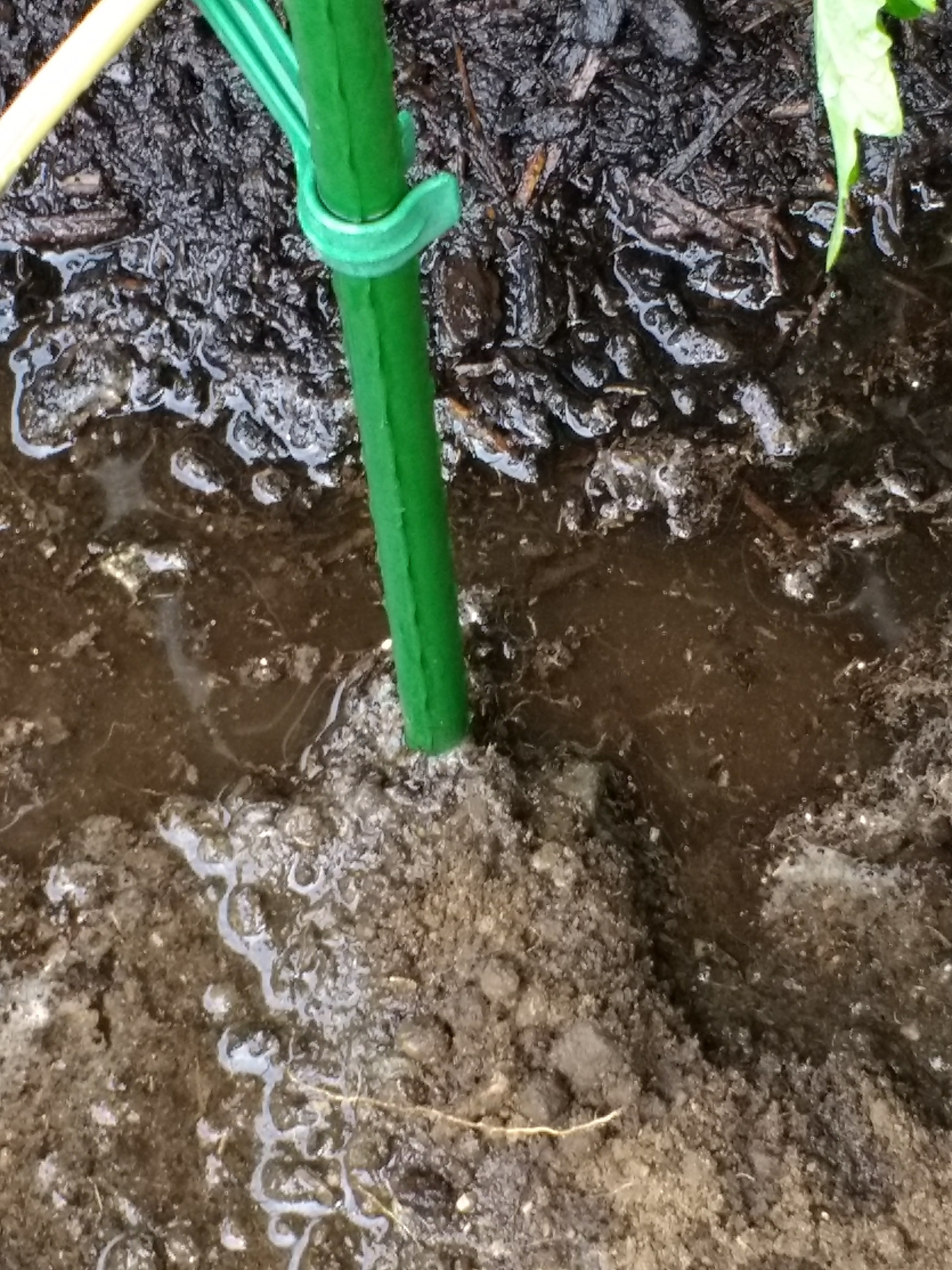
Once I pulled all of the purslane from this garden, water pooled on the surface and ran off rather than being absorbed by the soil.

“weedy”  with purslane (an edible plant, though not my favorite), so I set about clearing the entire plot. My thinking went like this: I’d clear the purslane so it wouldn’t compete with my garden plants for water and nutrients, and then I would cover any bare areas with compost and mulch to protect and build the soil.

Once all of those plants were cleared, however, I found I was left with dry, dusty soil that didn’t hold water well. Have you ever had a problem with hydrophobic soil? You might have experienced it when you let a flower pot filled with a peat-based mix dry out. No matter how much I watered the cleared garden, the soil seemed to repel, rather than absorb the water.

I went ahead as planned and covered the soil with compost and wood mulch–which helped with the watering problem, eventually–but I would not have had to remediate so extensively if I had selectively left some of that purslane in place. In many cases, a living root is better than compost and mulch. To be clear, I’m not advocating for letting any weed run rampant in the garden; certainly some weeds will outcompete garden plants. But in this case, I should have thought of that purslane itself as a garden plant–not only because it was edible, but also because it would have been a good friend to my garden, protecting the soil from erosion, supporting microbial life, and helping to retain water.

Bottom Line?

Start with soil! Make friends with the billions of organisms living underfoot, and they’ll do a lot of heavy lifting for you and your plants. Setting the shovel aside is just one way to keep your soil zoo happy. I’ll talk about what I’ve learned about no-dig and other soil-building methods, but up next in Part 2: Good Soil for a Healthy Planet.


For More Info…

From Green America, understanding the complexities of soil.

Interesting fact sheet from the USDA on soil health.

The Zoo Beneath Our Feet, from the Washington Post.

What is humus? From National Geographic.

Got worms? Earthworms can be an indicator of soil health. From MSU Extension.

How to Turn Dirt Into Soil From Yes! magazine, home gardeners share their experiences.

A deeper dive into soil aggregation. From the Soil System Sciences (SSS) Division of the European Geosciences Union(EGU).